
Image to Video AI FAQs
Image to Video AI is an online AI video generator that enables marketers and content creators to animate product photos, portraits or AI art into short clips by adding simple motion prompts, previewing results, and exporting with free credits.

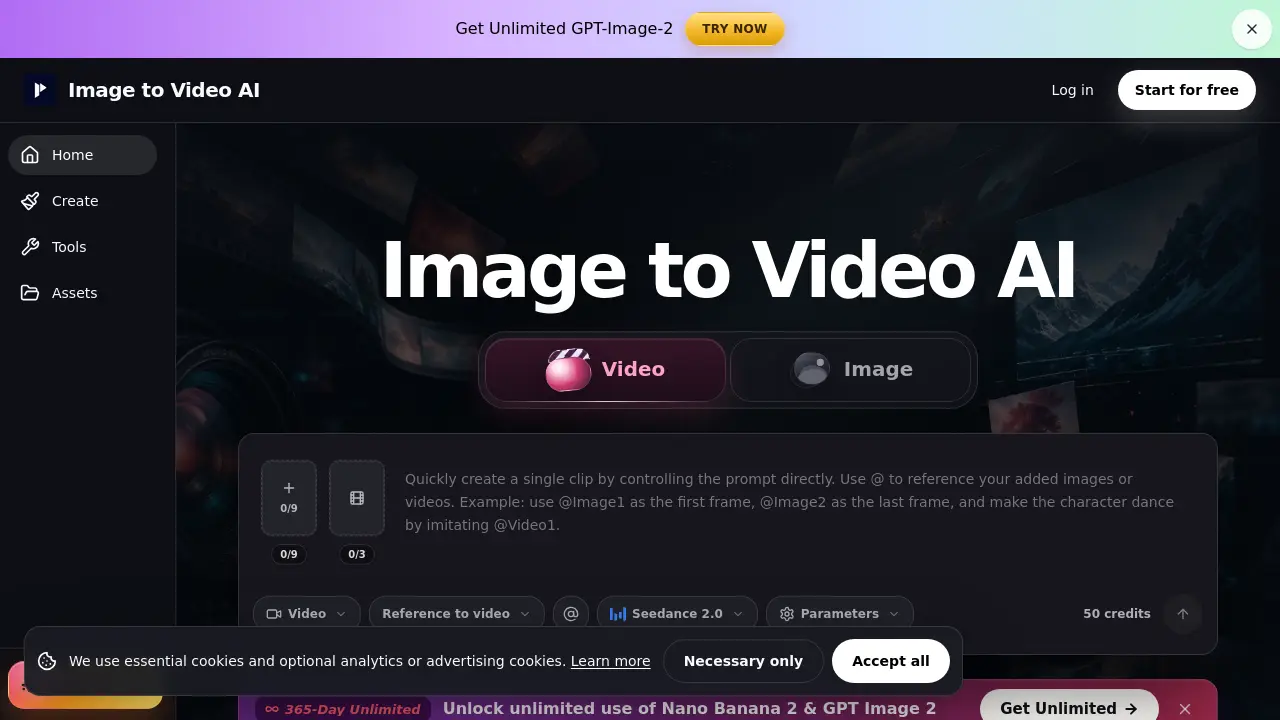
FAQs of Image to Video AI
What is Image to Video AI?
Image to Video AI is a web‑based platform that converts a single image, a set of frames, or reference media into short video clips. Users upload a product photo, portrait, poster, or AI‑generated image, describe the desired motion in one sentence, select a workflow, and the service generates a motion‑enhanced video for use on product pages, ads, Reels, Shorts, or creative reviews.
Is Image to Video AI free?
The service offers free credits after a new user signs up, allowing several test generations without cost. Failed jobs do not consume credits, but higher‑volume usage, watermark‑free exports, and additional privacy controls require a paid subscription. Credits are deducted only when a generation succeeds.
Do I need to upload an image?
For the core image‑to‑video workflow, an image upload is mandatory. Users may also start with text‑to‑video if no image is available, or generate an image first using a connected AI image model and then animate that result. The uploaded visual serves as the anchor for the motion model.
Which image formats are supported?
Image to Video AI accepts common raster formats such as JPG, JPEG, PNG, and WebP. Each format must meet the platform’s size and dimension limits, which vary slightly between the text/image, frames, and reference workflows. Unsupported formats are rejected during the upload step.
What is the difference between image to video and frames to video?
Image‑to‑video creates motion from a single source picture, extending it with a push‑in, rotation, or lighting shift. Frames‑to‑video requires both a start and an end frame; the system interpolates the transition between them, making it suitable for product reveals, before‑and‑after comparisons, or packaging animations. Consistency is generally higher with frames‑to‑video when a clear start and finish are defined.
Which image‑to‑video workflow should I choose?
Select text/image to video for quick single‑image animations and simple social hooks. Choose frames to video when you need a defined beginning and ending, such as a product opening or a before‑after showcase. Opt for reference to video when uploaded assets (video, audio, or multiple images) must guide style, timing, or character direction more closely.
Can I use Image to Video AI for product videos?
Yes, the platform is optimized for product imagery. A clean, well‑lit product photo combined with a concise motion prompt—e.g., “slow push‑in with a light shift”—produces short demo clips that work well on e‑commerce pages, advertising banners, and social media ads.
Can Image to Video AI keep a face, character, or product perfectly consistent?
The system improves consistency by anchoring the generation on the uploaded image, but perfect frame‑by‑frame fidelity cannot be guaranteed. Using sharp source material, limiting motion to a single action, matching aspect ratios, and preferring the frames‑to‑video workflow when precise start‑end control is needed will reduce drift.
Can I create videos for commercial use?
Commercial use is supported primarily through paid plans, which provide watermark‑free exports, enhanced privacy settings, and higher credit allocations. Users must still verify that source assets and generated content comply with the platform’s licensing terms before distribution.
How long does image‑to‑video generation take?
Typical jobs complete within a few minutes, though actual time depends on selected resolution, clip length, workflow complexity, queue traffic, and any reference assets included. Longer or higher‑resolution clips may require additional processing time.
Why should I keep my motion prompt simple?
The underlying AI model responds best to clear, focused instructions. A single subject action and one camera movement—such as “gentle rotation” or “slow push‑in”—reduce ambiguity, leading to more stable outputs and less unwanted drift. Complex multi‑action prompts should be split into separate short clips.
How can I reduce character, product, or logo drift?
To minimize drift, provide a high‑quality, fully visible source image, avoid fast or large rotations, match the output aspect ratio to the source, and consider the frames‑to‑video workflow for defined start‑end states. Reviewing and regenerating only problematic clips further improves overall consistency.
How should I make longer AI videos?
Compose longer sequences by generating several short, focused clips and stitching them together in a video editor. This approach maintains higher control over individual motions, allows selective regeneration of mismatched sections, and results in smoother final productions.
What are the credit rules for failed generations?
When a job fails—due to server error, unsupported input, or other issues—the platform does not deduct credits. Failed attempts are logged separately, enabling users to retry without penalty. Successful generations consume the number of credits displayed before the job starts.
How to use Image to Video AI
The tool converts a single image—product photo, portrait, poster, or AI‑generated artwork—into a short AI video clip, enabling quick demos, social ads, and creative reviews.
Select a workflow (text/image, frames, or reference), then upload a clean, well‑lit source image that matches the desired aspect ratio (16:9, 9:16, or 1:1).
Compose a concise prompt describing one motion (e.g., slow push‑in, gentle rotation) and any style or lighting keywords; avoid multiple actions or long story beats.
Initiate generation; the platform displays required credits, processes the request, and presents a preview thumbnail once the AI video finishes rendering.
Review the preview clip, checking subject consistency, motion accuracy, and brand elements; if needed, regenerate using an alternative workflow or adjust the prompt.
When the clip meets the brief, export the video—watermark‑free with a paid plan—or download the preview for further editing in external software.
Verify usage rights and credit consumption; free credits apply after signup, while failed jobs do not deduct credits, allowing iterative refinement.
Incorporate the final video into product pages, reels, shorts, or presentations, leveraging the short‑clip format to enhance engagement and accelerate creative testing.