
GPT Image 2 provides precise text‑to‑image generation for teams

What is GPT Image 2
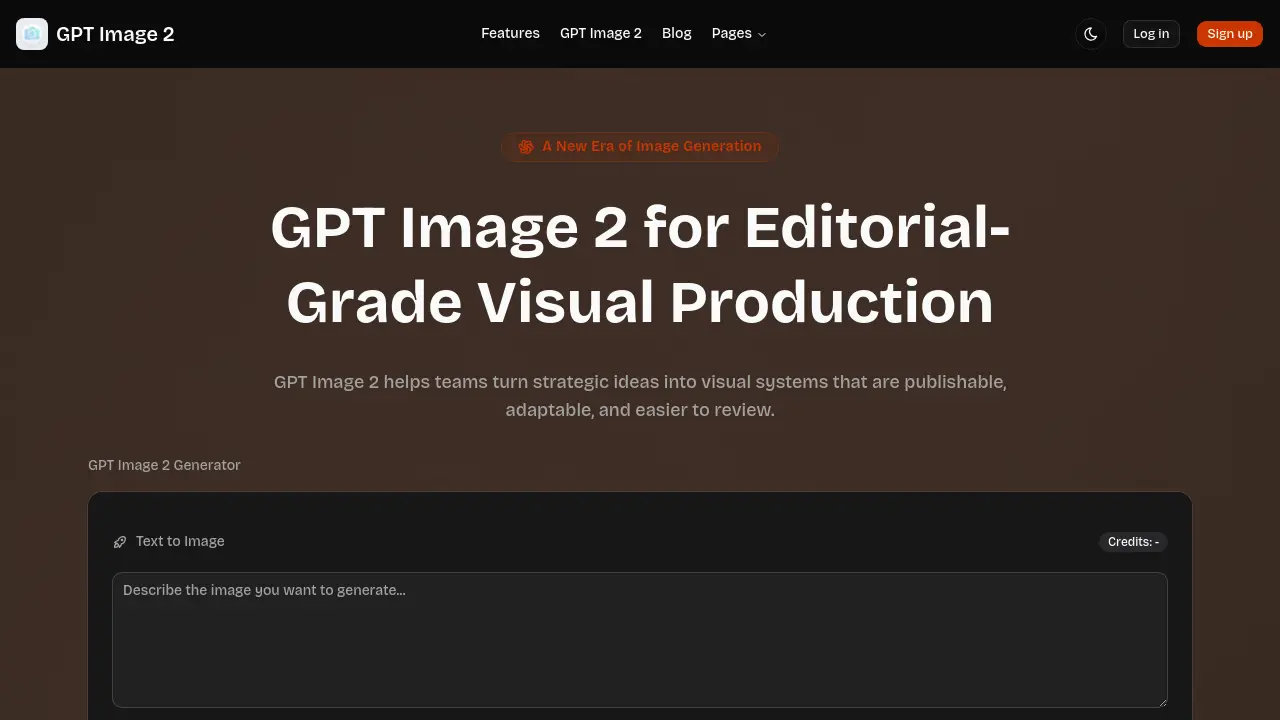
GPT Image 2 is an AI‑driven text‑to‑image generator built for editorial‑grade visual production. The platform emphasizes precision and prompt control, allowing teams to define layout intent, brand context, and copy style in a single request and refine details without restarting. Multilingual text rendering preserves type hierarchy across scripts, making it suitable for paid ads, landing pages, and launch posters. A flexible workflow supports rapid aspect‑ratio changes for social, web, and print assets, while maintaining consistent visual hierarchy. Typical use cases include educational diagrams, brand campaign bundles, creator content pipelines, and commerce mock‑ups. By structuring prompts into intent, variant generation, production‑level refinement, and consistent publishing, GPT Image 2 reduces revision cycles and aligns visual output with business objectives, positioning it as a repeatable tool for multidisciplinary teams.
How does GPT Image 2 work
GPT Image 2 operates as a structured text‑to‑image platform designed for editorial‑grade production. Users begin by defining intent, audience, and channel, then submit a prompt that includes layout, brand context, and copy style. The system generates controlled variants, allowing one‑parameter adjustments while preserving hierarchy and tone. Multilingual rendering maintains type hierarchy across scripts, and flexible aspect‑ratio options support social, web, and print formats. An iterative refinement loop lets teams lock hierarchy, tune copy blocks, and optimize crops before exporting consistent hero images, support cards, and derivative assets. This workflow reduces rework and aligns visual output with business objectives.
Benefits of GPT Image 2
GPT Image 2 provides a production‑grade text‑to‑image workflow that emphasizes precision, multilingual support, and repeatable review cycles. Users can define layout intent, brand context, and copy style in a single prompt, then refine details without restarting, which reduces revision churn. The platform handles flexible aspect ratios for social, web, and print, and maintains type hierarchy across language scripts—useful for ads, landing pages, and educational assets. By generating structured variants and locking hierarchy before final cropping, teams achieve consistent visual systems that streamline publishing across multiple channels while preserving brand cohesion.
Pros and Cons of GPT Image 2
Pros
- Precise prompt control over layout and branding.
- Multilingual text rendering retains hierarchy.
- Supports multiple aspect ratios and formats.
- Structured workflow reduces revision cycles.
- Enables consistent visual systems for teams.
Cons
- No clear pricing or free‑tier information.
- Limited reference image slots shown (0/20000).
- Dependent on well‑crafted prompts for quality.
- Community showcase appears empty or loading.
- Lacks explicit API or third‑party integration details.
Core Features of GPT Image 2
Text‑to‑Image Generation
Converts detailed prompts into high‑resolution images, enabling teams to produce publishable visuals directly from strategic concepts without manual design work.
Precision Prompt Control
Allows specification of framing, hierarchy, brand context, and copy style in a single prompt, offering tighter compositional control and reducing iterative re‑starts.
Multilingual Text Rendering
Renders text in multiple scripts while preserving typographic hierarchy, supporting localized ads, landing pages, and posters without breaking visual consistency.
Style Flexibility with Realism
Switches between editorial, cinematic, or other visual styles while maintaining compositional logic, facilitating cohesive visual families across campaign assets.
Flexible Formats & Layouts
Generates image variants across aspect ratios and output formats for social, web, and print, ensuring consistent hierarchy and readability across channels.
Structured Variant Production
Creates controlled image variants by altering one variable at a time, enabling deliberate comparison and efficient decision‑making within the production workflow.
Integrated Review & Refinement Loop
Locks hierarchy, tunes copy, and optimizes cropping in sequential steps, minimizing revision churn and aligning outputs with business objectives.
Use Cases of GPT Image 2
- Education teams: Convert complex concepts into structured visuals and diagrams for clearer lesson materials.
- Marketing departments: Produce brand‑consistent campaign assets across multiple formats and aspect ratios.
- Content creators: Generate coordinated cover art, in‑post illustrations, and promotional graphics with repeatable style controls.
- Product managers: Prototype packaging and merchandising visuals for rapid stakeholder feedback and iteration.
- Multilingual teams: Render localized advertisements while preserving typographic hierarchy across different scripts.
FAQs of GPT Image 2
What is GPT Image 2 for production teams?
GPT Image 2 is a text‑to‑image generation platform built specifically for collaborative visual production. It integrates a structured workflow that lets teams define intent, generate controlled variants, refine hierarchy, and publish consistent assets across editorial, marketing, and educational contexts.
How is the image workflow different from basic image generation tools?
Unlike single‑prompt generators, GPT Image 2 follows a four‑step workflow—intent framing, structured variant creation, sequential refinement, and systematic publishing. This process reduces rework, enforces brand hierarchy, and enables repeatable review cycles, which are essential for professional production pipelines.
Can the production workflow handle multilingual campaigns?
Yes, GPT Image 2 includes multilingual text rendering that preserves type hierarchy and layout when switching between scripts. This feature is useful for paid ads, landing page headers, and launch posters that require consistent visual structure across different languages.
Which aspect ratios and formats are supported?
The platform supports flexible formats and ratios commonly used in social media, web, and print. Users can quickly switch between square, portrait, landscape, and custom dimensions while maintaining message hierarchy and visual balance.
Is GPT Image 2 only for designers?
No, GPT Image 2 is intended for cross‑functional teams, including marketers, educators, product managers, and content creators. Its prompt‑control and review features allow non‑design specialists to generate and iterate on visual assets without deep design expertise.
How do we keep outputs consistent with brand standards?
Consistency is achieved by embedding brand context, layout intent, and copy style directly into the prompt. The iterative refinement loop then locks hierarchy, tunes copy blocks, and optimizes crops, ensuring every generated asset adheres to predefined brand guidelines.
What is a good workflow for first‑time teams?
New teams should start by clearly defining the objective, audience, and channel (Step 01). Next, generate a limited set of variants that change one variable at a time (Step 02). Then refine the selected variant by locking hierarchy, adjusting copy, and cropping as needed (Step 03). Finally, export the assets as a cohesive system for hero images, support cards, and social cuts (Step 04).
How many reference images can be used in a single prompt?
GPT Image 2 allows up to 20,000 reference images in a session, with a practical limit of 16 images displayed at once for efficient workflow management. This capacity enables teams to maintain visual consistency while exploring multiple style directions.
What types of use cases benefit most from GPT Image 2?
Typical use cases include education (visual lesson posters and diagrams), brand and campaign design (multi‑variant advertising sets), creator content ops (weekly visual series), and commerce (packaging and merch concept exploration). Each scenario leverages the platform’s ability to produce repeatable, structured visual systems.
How to use GPT Image 2
- GPT Image 2 generates editorial‑grade visuals from textual prompts, offering precise framing, multilingual rendering, and flexible aspect ratios for coordinated brand systems.
- Begin by entering the objective, target audience, and distribution channel; define style preferences to create a focused initial prompt that guides the generation engine.
- Click Generate; the platform produces structured variants, each altering a single attribute such as color palette or layout, enabling intentional side‑by‑side comparison.
- Review the variants, lock the visual hierarchy, adjust copy blocks, and fine‑tune crops within the same interface to reduce revision cycles.
- Export the finalized assets in required formats—hero image, social cut, or print‑ready file—ensuring consistent branding across all publishing channels.
- Analyse the output metrics displayed (e.g., hierarchy compliance, language fidelity); apply insights to iterate future prompts, achieving faster turnaround and tighter visual consistency.
