
String Theories
String Theories - Store, Challenge, and Search Your Thoughts
| Added on: | Jul 22, 2024 |
| Monthly Visits: | -- |
| Social & Email: | -- |

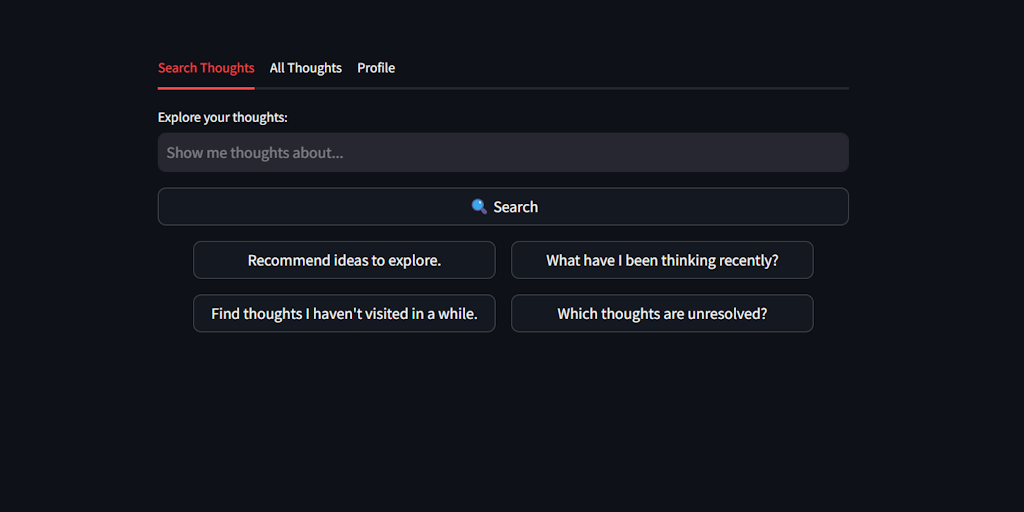
What is String Theories
String Theories is a Streamlit app that aims to help users understand the concepts and tools used in string theory. It's designed for anyone interested in theoretical physics, especially those who are just starting to learn about string theory. It allows you to visualize basic string theory concepts, like how strings vibrate in different modes, and explore some of the mathematics behind it. The app makes learning string theory more interactive and visual, which can help users grasp the core ideas better.
Benefits of String Theories
The String Theories app, found at the provided URL, appears to be inactive, based on the provided information. Users can reactivate the app, potentially to explore string theories, string theory terms, and different string theories. The app may offer information related to "string theories adam levy," "string theories fiber design," or the broader concept of "what is string theory." Reactivating the app could provide explanations, definitions, and examples related to string theory. Further exploration might clarify concepts such as "theories like string theory," or provide access to resources like a "string theories pdf."
Pros and Cons of String Theories
Pros
- The app can be woken back up.
- Streamlit forums provide support.
Cons
- The app goes to sleep.
- App inactivity causes sleep.
Core Features of String Theories
String Theories is a web application that allows users to generate different variations of text strings.
Users can input a string of text and select from a variety of options to manipulate the string. For example, users can choose to reverse the string, capitalize it, or convert it to lowercase. The application also allows users to generate random strings of text, which can be helpful for creating unique identifiers or passwords.
String Theories has a user-friendly interface that makes it easy to use.
The application is designed to be intuitive and easy to use, even for users who are not familiar with string manipulation. The interface is clean and uncluttered, and the options are clearly labeled. Users can easily see the results of their manipulations in real-time.
String Theories can be used for a variety of purposes.
The application can be used for a variety of tasks, such as:
- Generating unique identifiers
- Creating random passwords
- Manipulating text strings for specific purposes
- Experimenting with different string manipulation techniques
String Theories is a free and open-source application.
The application is available for free on GitHub and can be used by anyone. This makes it a valuable tool for developers and anyone else who needs to manipulate strings of text.
Use Cases of String Theories
- String Theories App Users: Understand different string theories and string theory terms using the String Theories application.
- Physics Students: Explore string theories examples and definitions with this educational tool related to String Theories.
- Researchers: Access resources related to String Theories, possibly including "string theories adam levy pdf".
- General Public: Get string theories explained in an accessible format using the String Theories application.
FAQs of String Theories
What is String Theories?
String Theories is a tool that allows you to create and share interactive data visualizations. It's built on the Streamlit framework, so it's easy to use and deploy.
How do I use String Theories?
You can use String Theories by creating an account and then using the web-based interface to create your visualizations. There are a number of different types of visualizations you can create, including line charts, bar charts, scatter plots, and maps. You can also add interactive elements to your visualizations, such as tooltips and filters.
What can I do with String Theories?
You can use String Theories to visualize data for a variety of purposes, such as:
- Exploring data: Use String Theories to create interactive visualizations that help you understand your data better.
- Sharing insights: Use String Theories to create visualizations that you can share with others.
- Building web applications: Use String Theories to create interactive web applications that incorporate data visualizations.
What are the benefits of using String Theories?
String Theories is a powerful tool that offers a number of benefits, including:
- Easy to use: String Theories is designed to be user-friendly, even for those with no prior experience with data visualization.
- Flexible: String Theories supports a wide range of data visualization types, so you can create the perfect visualization for your needs.
- Interactive: String Theories allows you to create interactive visualizations that engage your audience.
- Scalable: String Theories can be used to create visualizations for small and large datasets.
How does String Theories compare to other data visualization tools?
String Theories is a great option for users who want a tool that is easy to use, flexible, and interactive. It's also a good option for users who need to create visualizations for a variety of purposes. However, other tools may offer more features or advanced capabilities, depending on your specific needs.
String Theories Alternatives
Open-source AI coworker for Slack and Lark that runs Claude Code, Codex or Pi on your own machine with the plan or API key you already pay for.
Wery is a virtual AI studio that routes one goal to specialist agents for video, images, music and documents, keeping characters and project assets consistent.

Free invoice maker for freelancers and small businesses on Web, iOS and Android. Create unlimited PDF invoices, manage clients and companies, and bill from AI assistants via MCP.
Relay App turns plain-language instructions into AI workflows that connect 200+ apps, run reliable automations, and pause for human approval.
AtAt runs Claude Code, Codex, or local models in the text field you are typing in, no app-switching. It adds TabTab autocomplete, screenshots, and clipboard history.
Dash is an AI teammate in Slack and Microsoft Teams that connects 3,000+ tools, automates workflows and completes tasks in your channel.
Always free browser that shares your logged-in Chrome state with AI agents like Claude Code and Codex, running browser automation up to 3.45x faster.
Ritto AI learns from one real demonstration of your work, finds the repeated tasks, and completes them the same way. Join the beta for early access.
Memo Card turns live or recorded lectures into AI lecture notes with transcription, real-time translation, bilingual captions, quizzes, and replay.
Taskly is an AI-native task manager where teams describe work in plain English and Otto drafts, prioritizes, and organizes tasks with your approval every step.
Ottermind is an AI workspace where you describe your vision and it builds the architecture, code, and deployment. Work with files, memory, and tools across devices.
Convert PPT to Keynote-ready PPTX online. Free PPT to Keynote converter for Apple Keynote imports with secure processing and no installs.