
Tenderbolt FAQs
Tenderbolt uses AI to automate RFP and tender responses. It analyzes documents, completes security questionnaires, and generates tailored proposals.

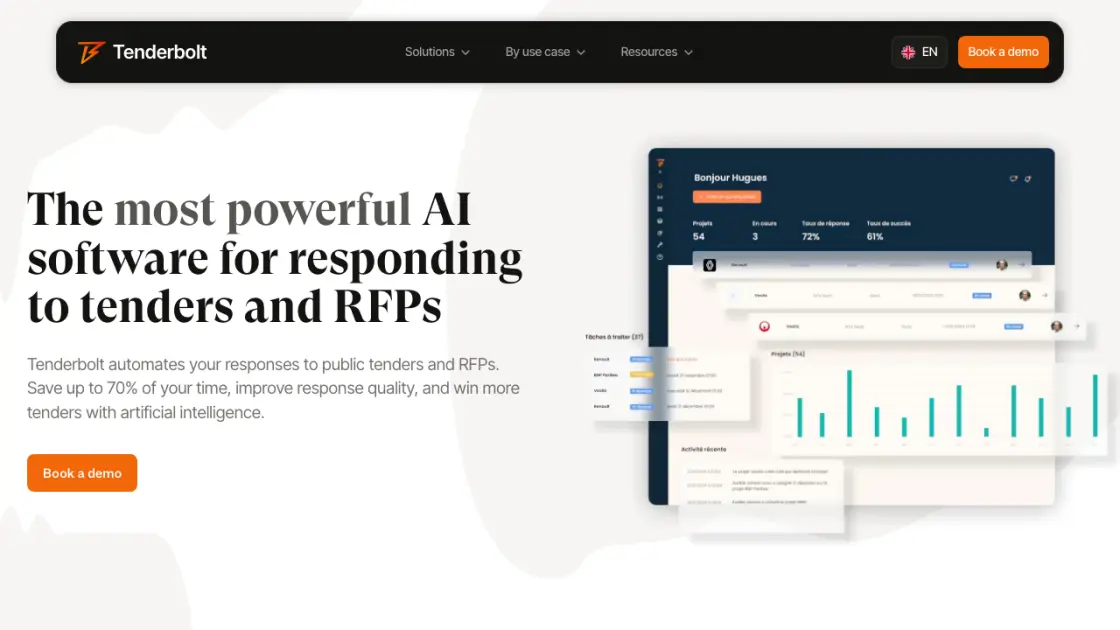
FAQs of Tenderbolt
What types of tenders can Tenderbolt handle?
Tenderbolt supports public procurement tenders, private RFIs and RFPs, security questionnaires, GDPR and CSR assessments, and technical Excel grids. It works across all industries and handles documents in PDF, Word, Excel, and PowerPoint formats.
How does Tenderbolt ensure response accuracy?
The AI draws exclusively from the organization's own knowledge base, not from general web data. Every response includes a source citation linking back to the original document. If the AI cannot find sufficient information to answer a question confidently, it flags the item as a partial answer rather than inventing content.
Is my data secure on the platform?
Tenderbolt stores all data on European servers encrypted at rest and in transit. The platform holds SOC 2 Type II certification and complies with GDPR requirements. Client knowledge bases are strictly isolated, and no customer data is shared or used to train models for other organizations.
What languages does Tenderbolt support?
The platform currently supports French and English, with the deepest coverage in French public procurement formats. Documents submitted in other languages can still be processed but with varying levels of accuracy.
How long does it take to get started?
Most teams run their first proposal within a day of initial setup. The onboarding involves uploading reference documents to build the knowledge base and configuring team workflows. No lengthy implementation or custom development is required.
How to use Tenderbolt
Book a demo on the Tenderbolt website to get access to the platform. The sales team will help configure the knowledge base and set up team accounts.
Upload your existing proposals, reference documents, and internal policies to build the AI knowledge base. The system indexes all content automatically without manual tagging or formatting.
Upload a new tender or RFP document to the platform. The AI analyzes the files and generates a structured summary with requirements, deadlines, and scoring criteria.
Review the AI-generated analysis and Go/No-Go recommendation. Share the structured summary with stakeholders through the collaboration dashboard to make informed decisions.
For questionnaire RFPs, review AI-drafted responses, assign domain experts for validation through built-in workflows, and export the completed response directly into the client's original file format.
