
Yipara Core Features
Yipara is an AI photo analysis tool for dog and cat owners. Upload a photo of any visible concern — skin, eye, ear, paw, wound, lump, insect bite, or unusual stool — and receive an instant analysis that helps you decide whether to monitor at home or seek veterinary care. Yipara is a triage aid and does not replace professional veterinary advice.

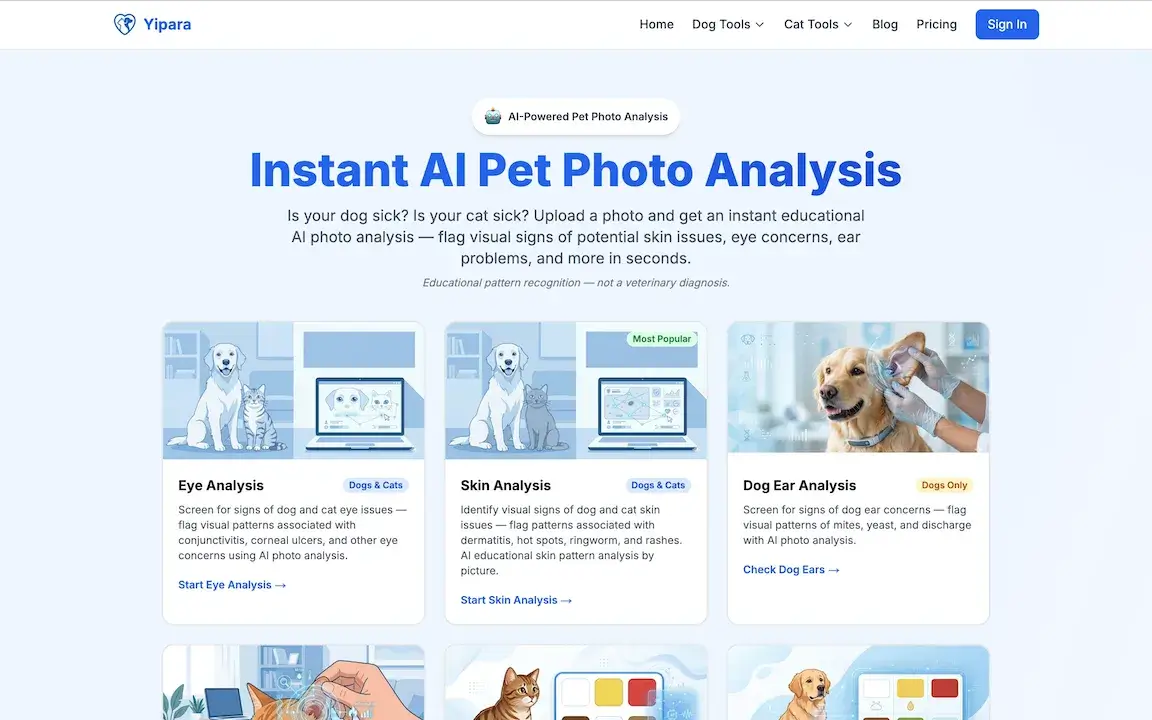
Core Features of Yipara
AI Photo Analysis for Specific Health Concerns
Processes uploaded images to detect visual patterns associated with skin, eye, ear, vomit, nose, dental, urinary, and wound issues, providing an educational report that guides further veterinary consultation.
Body Condition Scoring (BCS)
Analyzes side and top‑down photos to assign a BCS rating (1–9) for dogs and cats, offering diet and exercise recommendations based on the score.
Parasite and Bug Identification
Identifies common external parasites—fleas, ticks, mites, lice, and other bugs—from photos, helping owners recognize infestations and initiate appropriate treatment.
Hair Loss and Skin Disorder Detection
Examines fur and skin images to flag conditions such as dermatitis, ringworm, mange, flea‑allergy dermatitis, and endocrine‑related hair loss, prioritizing urgent veterinary attention when needed.
Oral Health Evaluation
Evaluates photos of teeth, gums, and tongues to spot tartar, gum inflammation, tooth decay, and other dental problems, delivering preliminary insights for veterinary follow‑up.
Use Cases of Yipara
- Veterinary students: Use Yipara’s AI skin analysis to compare textbook cases with real‑world photo patterns for quick visual learning.
- Pet owners: Upload a dog ear photo to instantly flag mite or yeast signs, helping decide whether a vet appointment is necessary.
- Animal shelter staff: Run batch eye‑discharge analyses on cats to prioritize medical triage before adoption screenings.
- Veterinary techs: Generate preliminary AI reports on dog poop samples to streamline client consultations and reduce exam time.
- Research assistants: Collect AI‑generated body condition scores for large canine cohorts, supporting epidemiological studies on pet obesity.
