
AI Image Detector Introduction
AI image detector that cross-checks four independent detection models under a published weighted-vote rule. Graded conclusions, not fake percentages.

What is AI Image Detector
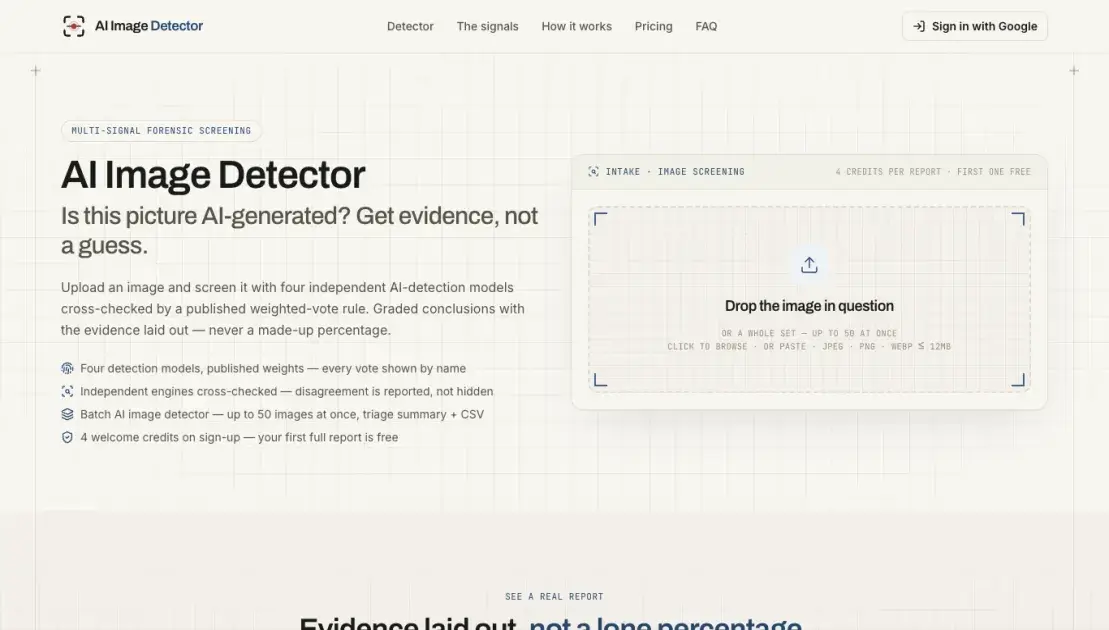
AI Image Detector is a forensic screening tool that determines whether an image was generated by artificial intelligence. The platform cross-checks uploads against four independent detection models — Sightengine GenAI, Winston AI, Was It AI, and an open-source SAFE engine — under a published weighted-vote rule. When C2PA credentials or generator self-tags are present and certain, they override every model. Each report shows every engine's vote by name, with disagreement reported honestly rather than hidden behind a single percentage. The tool supports JPEG, PNG, and WebP formats, with batch screening for up to 50 images at once. New accounts receive four welcome credits, enough for one full report. Conclusions span five grades from AI-generated to real, backed by deterministic file evidence where available.
How does AI Image Detector work
When an image is uploaded, the AI image detector first checks for C2PA credentials and generator self-tags. If present and certain, these deterministic signals decide the conclusion outright. Otherwise, four independent detection models — Sightengine GenAI, Winston AI, Was It AI, and SAFE — run in parallel, each casting a weighted vote. The votes combine under a published rule into one of five grades: AI-generated, likely AI, inconclusive, likely real, or real. The SHA-256 hash is recorded for chain-of-custody. Every engine's contribution is named in the report, and disagreement is reported honestly rather than blended into a single score.
Benefits of AI Image Detector
The AI image detector provides evidence-based conclusions rather than single-percentage guesses, making results defensible in professional contexts. Four independent engines cross-check each other, so disagreement surfaces as an honest "inconclusive" result instead of being hidden. The tool covers every major generator — Midjourney, DALL·E, Flux, Stable Diffusion, and more — across four independent models. Batch screening with CSV export streamlines moderation queues, while shareable report links and forensic PDFs support collaborative workflows. The free tier runs the full detector without feature restrictions, and dead engines automatically refund credits. For trust and safety teams, the shared workspace history and priority support on the Team plan add operational efficiency.
Pros and Cons of AI Image Detector
Pros
- Four independent engines with published weights — every vote attributed by name
- C2PA credentials override model votes for deterministic results
- Free tier runs the full detector without feature restrictions
- Batch screening up to 50 images with CSV export
- Dead engines automatically refund credits
Cons
- Free tier limited to one full report (4 credits)
- Per-report cost may increase as new engines are added
- No mobile app — web-based only
- Some social platform links return verification failures
