
Fusedash Core Features
Fusedash is an AI data visualization platform for teams to build dashboards, charts, and reports from CSVs and APIs, with maps, storytelling, and data chat.

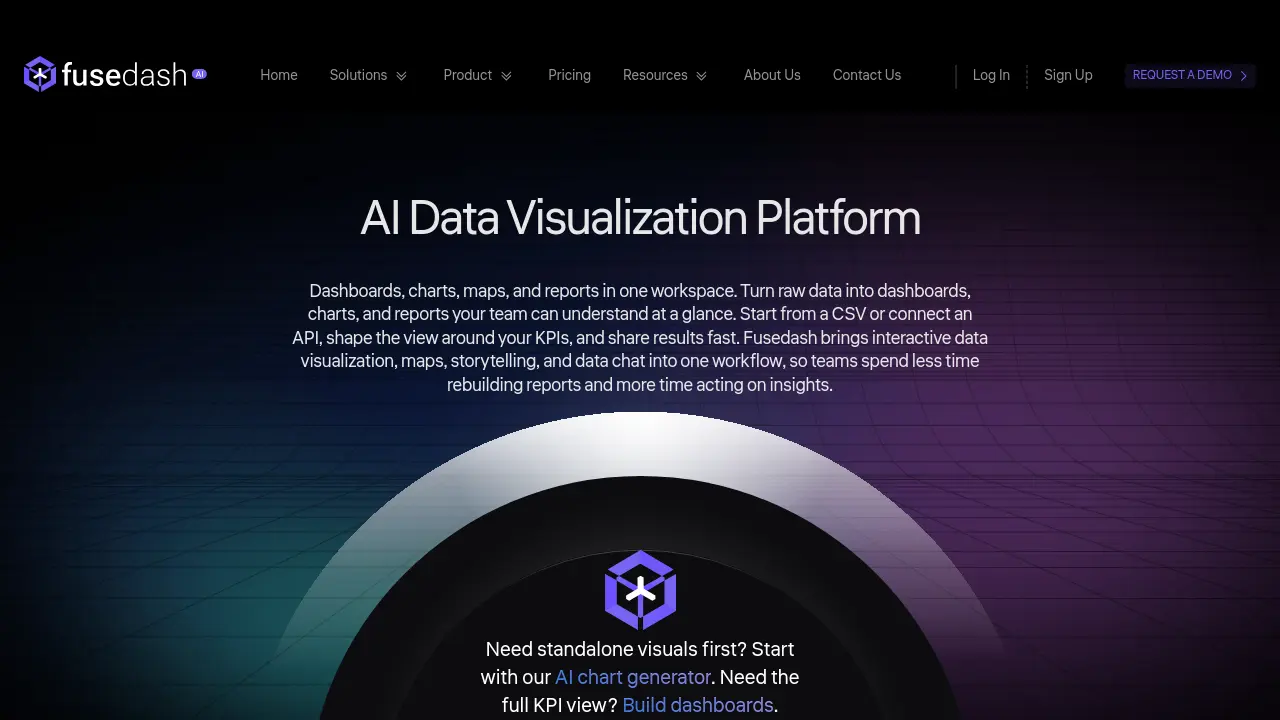
Core Features of Fusedash
Data Integration
Connect CSV files, APIs, and public data sources into a unified dataset. This foundational function allows reuse across all visualizations and reports within the platform.
Dashboard & Storytelling Reporting
Combine interactive KPI dashboards with narrative reporting in one workspace. This function provides context for data changes, aligning teams and reducing conflicting report versions.
Flexible View Building
Transform a single dataset into multiple formats—dashboards, charts, maps, or reports—tailored to different audiences. Customize layouts, filters, and time ranges without duplicating work.
AI Chart Generation
Automatically generate clear charts from uploaded data using AI. This function selects appropriate chart types, applies comparisons, and refines labels for accurate data storytelling.
AI Chat Interface
Query datasets using plain language to explore breakdowns and receive metric suggestions. This function turns conversational insights directly into shareable dashboard views.
Real-Time Monitoring
Display live data updates through a dedicated real-time interface. This function supports continuous operational oversight and immediate alerting for time-sensitive metrics.
Consistent Metric Definition
Create standardized KPIs and dimensions reusable across all platform outputs. This function ensures uniform definitions and time comparisons, building trust in reported numbers.
Use Cases of Fusedash
- Business Leaders: Generate executive-ready performance summaries using AI-powered storytelling from centralized datasets.
- BI Analysts: Quickly create accurate visualizations from CSV or API data with AI-driven chart type recommendations.
- Marketing Teams: Monitor campaign KPIs in real-time through interactive dashboards with automated data refreshes.
- Operations Managers: Track logistics and supply chain efficiency using live map visualizations connected to operational APIs.
- Finance Teams: Standardize financial reporting by reusing consistent metrics across dashboards, charts, and narrative reports.
