
Hex FAQs
Discover the power of Hex's end-to-end no-code workflows, including spreadsheet-style calcs, data browsing, and endorsements. With SQL, Python, AI, and more, Hex is the first platform to bring these modalities together in one collaborative workspace.

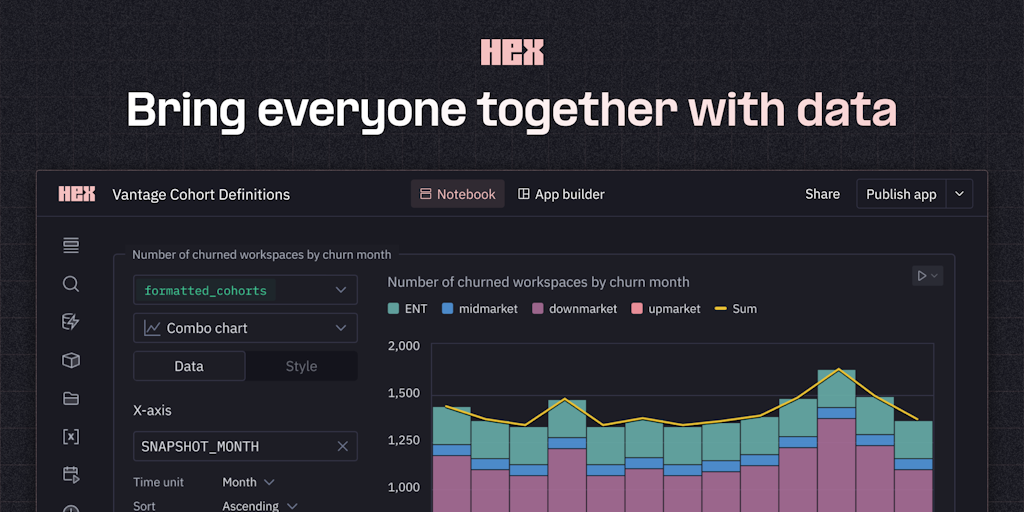
FAQs of Hex
What is Hex?
Hex is a collaborative, AI-powered workspace for data exploration, analysis, and visualization. It's designed to bring everyone together, from data scientists to business analysts to stakeholders, to work with data in a unified way.
How does Hex work?
Hex is built around a simple, intuitive interface that makes it easy to connect to data sources, write queries, build visualizations, and share your findings. It's also powered by AI features that help you analyze your data more effectively and make better decisions.
What are some of the benefits of using Hex?
Hex helps you streamline your data workflow, collaborate more effectively with your team, and gain deeper insights from your data. Its AI features can help you discover patterns, identify anomalies, and generate insights that you might otherwise miss.
How does Hex compare to other data analysis tools?
Hex stands out from other data analysis tools by offering a unified workspace that combines data exploration, analysis, and visualization in a single platform. It's also designed to be highly collaborative, making it easy for teams to work together on projects. Its AI features also differentiate it from other tools by providing more advanced insights and automating some of the more tedious tasks of data analysis.
Who should use Hex?
Hex is suitable for anyone who works with data, including data scientists, business analysts, data engineers, and product managers. It's also a great tool for teams who need to collaborate on data analysis projects.
